National Program and Policy (Lead)
Clinical Innovations and Translation (Lead)
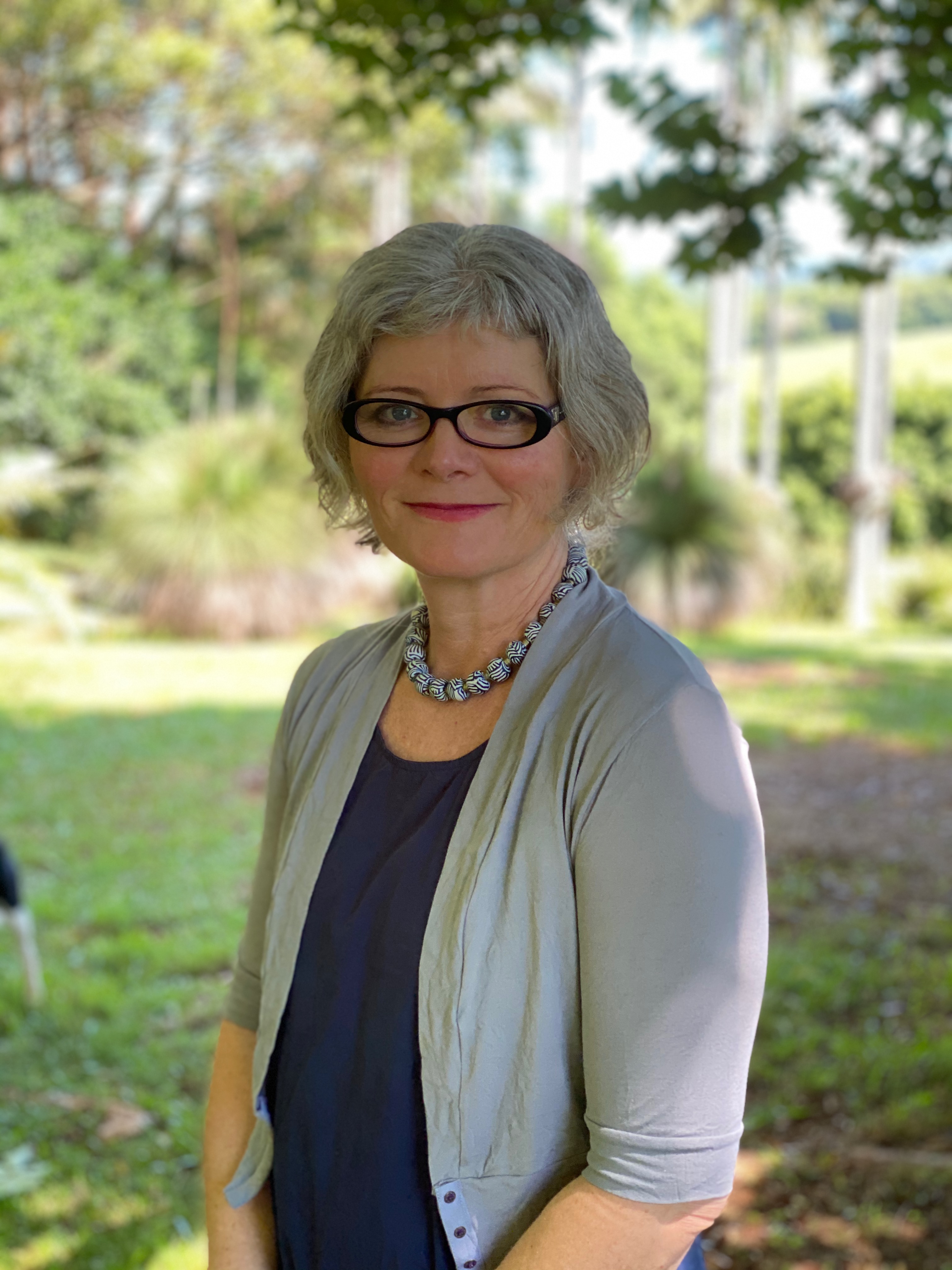
Peta Marks (she/her) is InsideOut's Chief of National Programs and Clinical Services - a role which includes planning, delivery and oversight of IOI's translational national projects - including policy, digital, eLearning, eTherapy, translation and data projects.
Peta has a Master's in Public Health and extensive experience in national project management in mental health, having been involved in mental health service planning, framework and strategy development, and workforce development projects for the past 15+ years. Her focus is on always ensuring strong stakeholder engagement, genuine co-production with consumers and carers, and collaborative, constructive and transparent working processes across all projects.
As a mental health nurse (Peta is a Registered Nurse, a Credentialed Mental Health Nurse) and with a Masters in Couple and Family Therapy, Peta has always maintained a clinical practice providing psychological therapy for people with anorexia nervosa and their families - it is this strong grounding in the reality of how hard it is to experience and recover from an eating disorder, that drives her passion for genuine co-production in all her work.
Peta is a highly respected mental health nurse and the editor of a number of publications, including as co-editor of Elsevier's Mental health in Nursing text books. She is also passionate about the care and wellbeing of refugees and asylum seekers and has established a community-based group that fundraises for refugee support in her local community, which is based in the Byron hinterland, Bundjalung country in Northern New South Wales.
Funded by the Australian Government Department of Health, this document provides the roadmap to establishing eating disorders as a national research priority.
Complete
The Translation Blueprint will build on and align to key existing national sector documents, and provide guidance for services across the country to build on their practice and impact, and policy makers for funding and decision making.
In Progress
This study looked at how eating disorder research was funded in Australia between 2009 and 2021 and compared it with funding for other mental health conditions. It found that eating disorders receive far less research investment than their severity, prevalence, and high mortality rates would justify, highlighting a major gap between need and funding.
Complete
This trial will develop and evaluate a personalised package of care for young people with anorexia nervosa aged 14-25 through co-production with individuals and families, with treatment tailored based on regular clinical and psychometric review.
In Recruitment
The GP Hub is an innovative, evidence-based digital suite of tools supporting GPs in the assesment and management of people living with eating disorders in Australia. Designed with GPs, people with lived experience of eating disorders, clinicians, practice managers and practice nurses, the GP Hub serves as a one-stop resource to streamline patient care and support GPs.
In Recruitment
SkillED is an online CBT self-help program with 11 self-paced modules that evaluates innovative engagement strategies - including individual treatment choice and just-in-time adaptive interventions - to reduce dropout rates and improve adherence and outcomes for individuals aged 12+ experiencing eating disorder symptoms.
In Recruitment
The InsideOut eClinic is a free online platform that provides Cognitive Behavioural Therapy (CBT)-based eTherapy programs for individuals experiencing body image or eating concerns, support for carers, and tools for clinicians supporting people with eating disorders or disordered eating.
In Recruitment
The Holistic Understanding study is a longitudinal, biopsychosocial dense-sampling study designed to uncover the mechanisms underlying eating disorder development and maintenance, addressing gaps in current understanding that limit treatment efficacy.
In Recruitment
The Upskilling Project aims to improve treatment and early intervention of eating disorders in mainstream mental health settings nationally by embedding evidence-based treatment in care and upskilling frontline mental health clinicians.
In Progress
The Essentials: Upskilling a National Health Workforce in the Identification and Treatment of Eating Disorders
Maloney, D., Ong, S. H., Miskovic-Wheatley, J., Dann, K. M., Sidari, M., Hambleton, A., Marks, P., & Maguire, S.
The International Journal of Eating Disorders.
57(12), 2427–2437.
Screening, Assessment and Diagnosis in the Eating Disorders: Findings From a Rapid Review
Bryant E, Spielman K, Le A, Marks P; National Eating Disorder Research Consortium; Touyz S, Maguire S.
Journal of Eating Disorders.
10(1), 78.
Treating the Individual: Moving Towards Personalised Eating Disorder Care
Bryant E, Marks P, Griffiths K, Boulet S, Pehlivan M, Barakat S, Touyz S, Maguire S.
Journal of Eating Disorders.
13(1), 63.
Gaining Consensus on Clinical Quality Outcomes for Eating Disorders: Framework for the Development of an Australian National Minimum Dataset
Bryant E, Broomfield C, Burrows J, McLean S, Marks P, Maloney D, Touyz S, Maguire S.
BMJ Open.
13(4).
Mortality and Mental Health Funding-Do the Dollars Add Up? Eating Disorder Research Funding in Australia From 2009 to 2021: a Portfolio Analysis
Bryant E, Koemel N, Martenstyn JA, Marks P, Hickie I, Maguire S.
The Lancet regional health. Western Pacific.
37.
The Essentials: Upskilling a National Health Workforce in the Identification and Treatment of Eating Disorders
Maloney D, Ong SH, Miskovic-Wheatley J, Dann KM, Sidari M, Hambleton A, Marks P, Maguire S.
International Journal of Eating Disorders.
57(12), 2427 - 2437.
Risk Factors for Eating Disorders: Findings From a Rapid Review
Barakat, S., McLean, S. A., Bryant, E., Le, A., Marks, P., Touyz, S., Maguire, S., & Research Consortium
Journal of Eating Disorders.
11(1).


© 2026 InsideOut
InsideOut acknowledges the tradition of custodianship and law of the Country on which the University of Sydney and Charles Perkins Centre campus stands. We pay our respects to those who have cared and continue to care for Country. We are committed to diversifying research and eliminating inequities and discrimination in healthcare. We welcome all people regardless of age, gender, race, size, sexuality, language, socioeconomic status, location or ability.