

© 2026 InsideOut
InsideOut acknowledges the tradition of custodianship and law of the Country on which the University of Sydney and Charles Perkins Centre campus stands. We pay our respects to those who have cared and continue to care for Country. We are committed to diversifying research and eliminating inequities and discrimination in healthcare. We welcome all people regardless of age, gender, race, size, sexuality, language, socioeconomic status, location or ability.
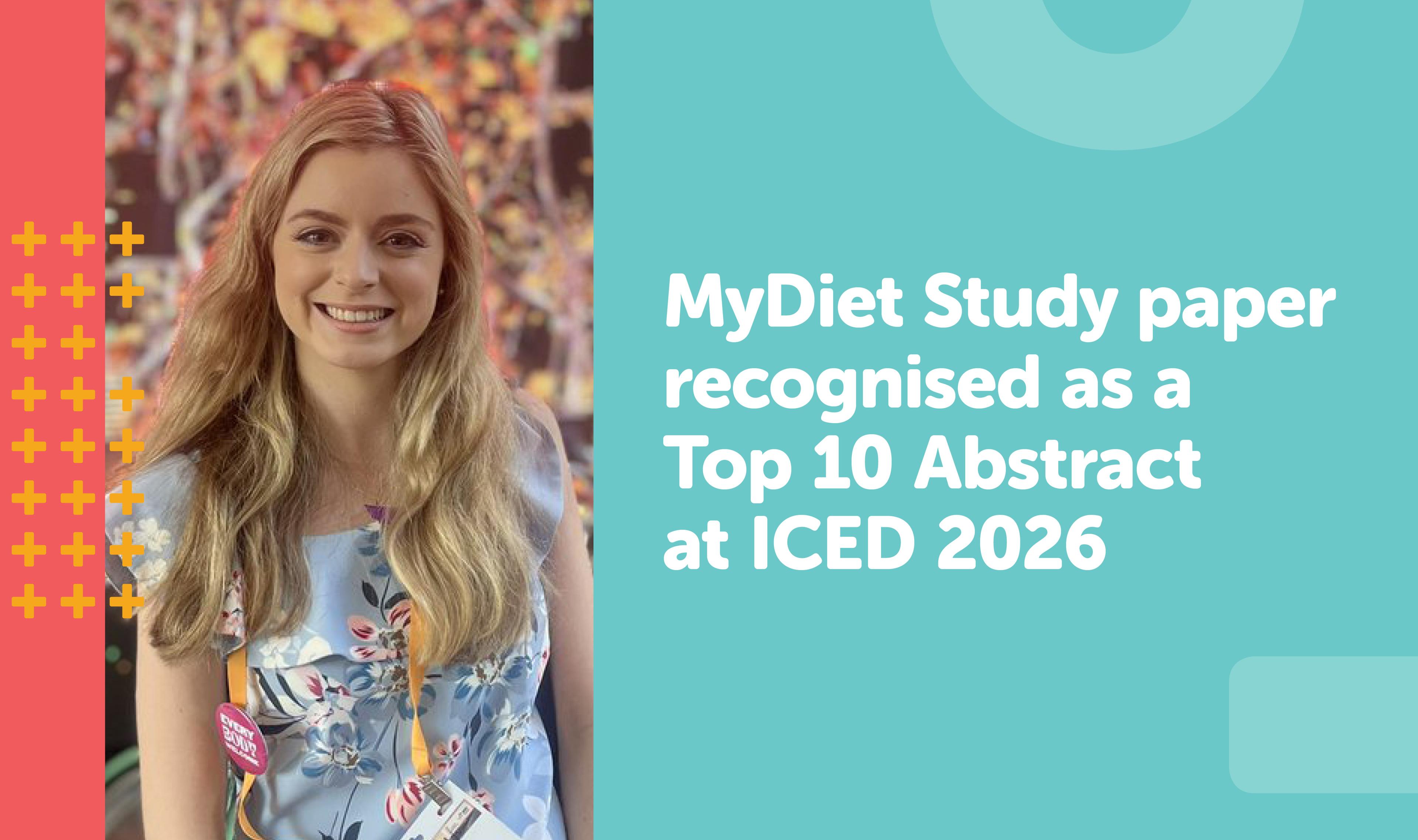
The International Conference on Eating Disorders (ICED) brings together leading clinicians, researchers, and policymakers from around the world to showcase cutting-edge research and advance global understanding of eating disorders. Selection as a top abstract signals the significance and innovation of Dr Melissa Pehlivan’s work in addressing one of the most pressing public health challenges affecting young people today.
The same conference will see Prof Sarah Maguire presenting in the opening day Treatment Plenary, discussing the topic “Measurement-Focused Care in Eating Disorders: Promises and Pitfalls.”
The MyDiet Study addresses a critical gap in eating disorders prevention: understanding how risk emerges among young people who begin dieting.
While dieting has been long-established as an incredibly risky behaviour for eating disorder development in young people, we have no in-depth longitudinal studies tracking young people who diet to understand the very early warning signs of eating disorders as they start to develop. To address this, InsideOut conducted the world’s first study to follow a group of young people over time and track what happens when they start dieting, while also examining the gut microbiome and eating disorder genetic risk.
A comprehensive screening and risk management strategy, developed in collaboration with eating disorder experts, was used to assess and manage eating disorder risk in the 1000 young people who initially signed up for the study. Around 500 young people, who screened as without any eating disorder risk, were asked to complete detailed monthly assessments using validated psychological and behavioural measures for 6-months. This design enabled researchers to capture the natural trajectory of dieting and identify when and how eating disorder risk begins to emerge.
The findings offer researchers, clinicians, parents, and educators unparalleled insights into how eating disorder risk develops among dieters;
Nearly one-third of young people developed clinically significant eating disorder risk within the first month of dieting, despite having no detectable indicators prior
All participants who developed risk did so within the first month, highlighting a clear and actionable window for early intervention
Those who developed eating disorder risk while dieting were indistinguishable at baseline from those who did not, across demographic, psychological, and health factors. This suggests we may not be able to predict who will develop eating disorder risk while dieting.
Advanced modelling suggested that those who developed eating disorder risk within the first month of dieting, would continue to deteriorate, and report clinically significant levels of eating psychopathology.
Young people in higher weight ranges appeared particularly at risk, reporting higher general and eating-specific psychopathology at diet onset, and more extreme weight loss goals than lower-weight participants.
Weight loss goals among the participants were typically unrealistic, and represented a substantial change from their current weights, often despite already being within a healthy range.
In the subset of the sample, who gave biological samples, we saw differences in gut microbiota profiles between those who stuck to their diet and those who did not, suggesting there may be a role in diet adherence within the gut.
Together, these findings provide unprecedented insight into the earliest stages of eating disorder development among young people who diet. Critically, they underscore that:
By outlining a clear early risk window and distinct patterns of escalation, the research identifies a powerful opportunity to intervene before full-threshold eating disorders develop; something we know can be key to recovery from this illness.
The study’s findings are expected to play a key role in shaping future prevention and early intervention guidelines, with implications for schools, families, healthcare systems, and public health policy. They will be pivotal in informing future guidelines on dieting and risk management, helping to reduce the global impact of eating disorders.
Ongoing work will further integrate psychological, biological, and genetic data, aiming to better understand how these factors interact to influence risk trajectories and to refine targeted prevention strategies.
Melissa’s recognition at ICED ‘26 highlights both the global importance of this work and its potential to drive meaningful change in how eating disorders are identified, prevented, and treated.
Stay tuned for the publication — congratulations Melissa!
Read other results papers from the MyDietStudy:
https://www.sciencedirect.com/science/article/pii/S0195666324004884?