

© 2026 InsideOut
InsideOut acknowledges the tradition of custodianship and law of the Country on which the University of Sydney and Charles Perkins Centre campus stands. We pay our respects to those who have cared and continue to care for Country. We are committed to diversifying research and eliminating inequities and discrimination in healthcare. We welcome all people regardless of age, gender, race, size, sexuality, language, socioeconomic status, location or ability.
7 min read
This article was developed in close collaboration with the team of dietitians at InsideOut Institute and was led by Dr Shu Hwa Ong is an Accredited Practising Dietitian, Biostatistician, and Research Officer at InsideOut Institute. This piece draws on their collective clinical expertise and evidence-based approach to nutrition and eating disorder care.
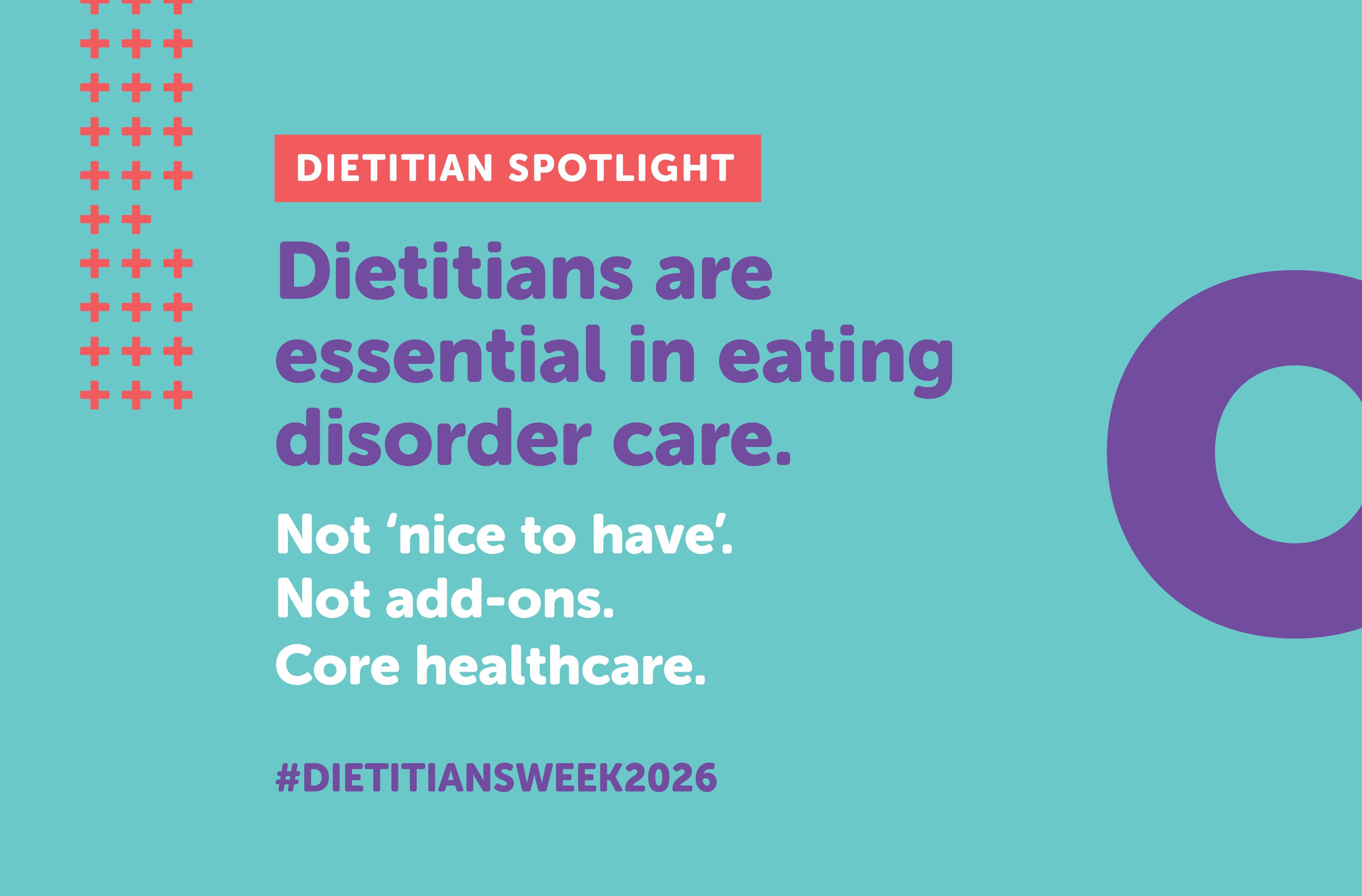
Dietitians play a critical role in healthcare, and their role is particularly vital in the screening, assessment , treatment, and recovery of people experiencing eating disorders or disordered eating. While eating disorders are often discussed in psychological terms, they are also fundamentally medical and nutritional conditions — meaning without specialised nutrition care, recovery outcomes can be compromised.
Dietitians provide specialised, evidence‑based nutrition and dietary advice to improve an individual’s health and wellbeing. They can also help manage and treat chronic and temporary medical conditions, along with broader disease management.
Dietitians also provide specialised support for individuals experiencing eating disorders, disordered eating, or emotional eating. In this instance, their work focuses on developing individualised nutrition care plans that aim to restore adequate intake, normalise eating patterns, and support the re‑establishment of a healthier relationship with food.
Unlike general nutrition advice, dietetic care is tailored to the individual’s medical status, behaviours, beliefs around food, and stage of recovery. This ensures nutrition support is both safe and effective, particularly for people who may be medically compromised.
Qualified dietitians are uniquely trained to translate complex nutrition science into practical, safe, and effective strategies. Their education equips them to deliver medical nutrition therapy, allowing them to manage individualised nutrition care for people living with chronic illness, mental health conditions, and eating disorders.
This expertise is especially important in eating disorder treatment, where incorrect or oversimplified nutrition advice can increase medical risk, reinforce harmful beliefs, or delay recovery. Dietitians use evidence‑based approaches tailored to the individual to improve health outcomes while prioritising safety and long‑term wellbeing.
One of the most critical reasons dietitians are essential in eating disorder care is their central role in nutritional rehabilitation. Dietitians are trained to identify and manage malnutrition, develop structured and safe refeeding plans, and monitor the medical risks associated with inadequate intake.
They help stabilise both physical health and cognitive function, which is an essential foundation for psychological therapy to be effective. Without adequate nourishment, the body and brain struggle to engage fully in recovery.
Best‑practice eating disorder care relies on a multidisciplinary treatment team, and dietitians are a core component of this approach. Working alongside psychologists, medical practitioners, and other health professionals, dietitians contribute specialised knowledge that reduces medical risk and supports recovery.
Their involvement helps stabilise people earlier in treatment, reduces complications related to malnutrition or refeeding, and can shorten hospital admissions. In this way, dietitians are not only clinically essential but also a highly cost‑effective part of the healthcare system.
When nutrition is treated as an optional or secondary aspect of eating disorder treatment, the whole recovery process becomes unbalanced and outcomes are compromised. Eating disorders are psychological and medical conditions, but they are also nutritional illnesses at their core.
If nutrition is not embedded into treatment plan from the outset, individuals often don’t get the structured support they need to restore adequate intake and correct malnutrition.
Without early and structured nutrition support:
· Medical stability often takes longer to achieve
· Refeeding risks increase
· Psychological progress slows due to inadequate brain fuel
It also means individuals miss the opportunity to rebuild accurate food knowledge and develop a healthier relationship with eating.
Without timely, adequate nutrition treatment from a qualified dietitian, treatment becomes more stressful, less effective, and often more costly due to prolonged recovery.
Dietitians can contribute to eating disorder research and clinical guideline development as researchers, reviewers, and clinical experts. They bring clinical expertise into guideline writing, help conduct and interpret research, and review scientific literature to ensure recommendations reflect the most current, high-quality evidence.
They also play a key role in ensuring guidelines are safe, nutritionally sound, and practical to implement in real‑world healthcare settings. This involvement is essential to keeping eating disorder treatment current, evidence‑based, and grounded in everyday clinical practice.
Evidence alone isn’t enough — people need help applying it. Dietitians translate complex research into clear, practical steps, such as structuring meals, challenging food fears, and rebuilding eating patterns.
For example, if a patient believes “carbohydrates are bad,” a dietitian explains the evidence, highlights why carbohydrates are essential for recovery, and supports the individual to reintroduce them safely and confidently. This makes evidence understandable, actionable, and achievable in real life.
Dietitians’ impact extends far beyond individual nutrition advice. Through collaboration with multidisciplinary teams, contributions to research and guideline development, and delivery of evidence‑based care, dietitians help create safer systems, strengthen treatment pathways, and improve recovery outcomes across the healthcare system.
At InsideOut, we recognise the vital role dietitians play not only in supporting individual recovery, but in driving meaningful progress across eating disorder care — reinforcing that recovery is most effective when nutrition is recognised as core care and delivered together.
Butterfly National Helpline: 1800 334 673
Beyond Blue: 1300 22 4636
Lifeline: 13 11 14
Men’s Line Australia: 1300 78 99 78
Kids Helpline: 1800 55 1800