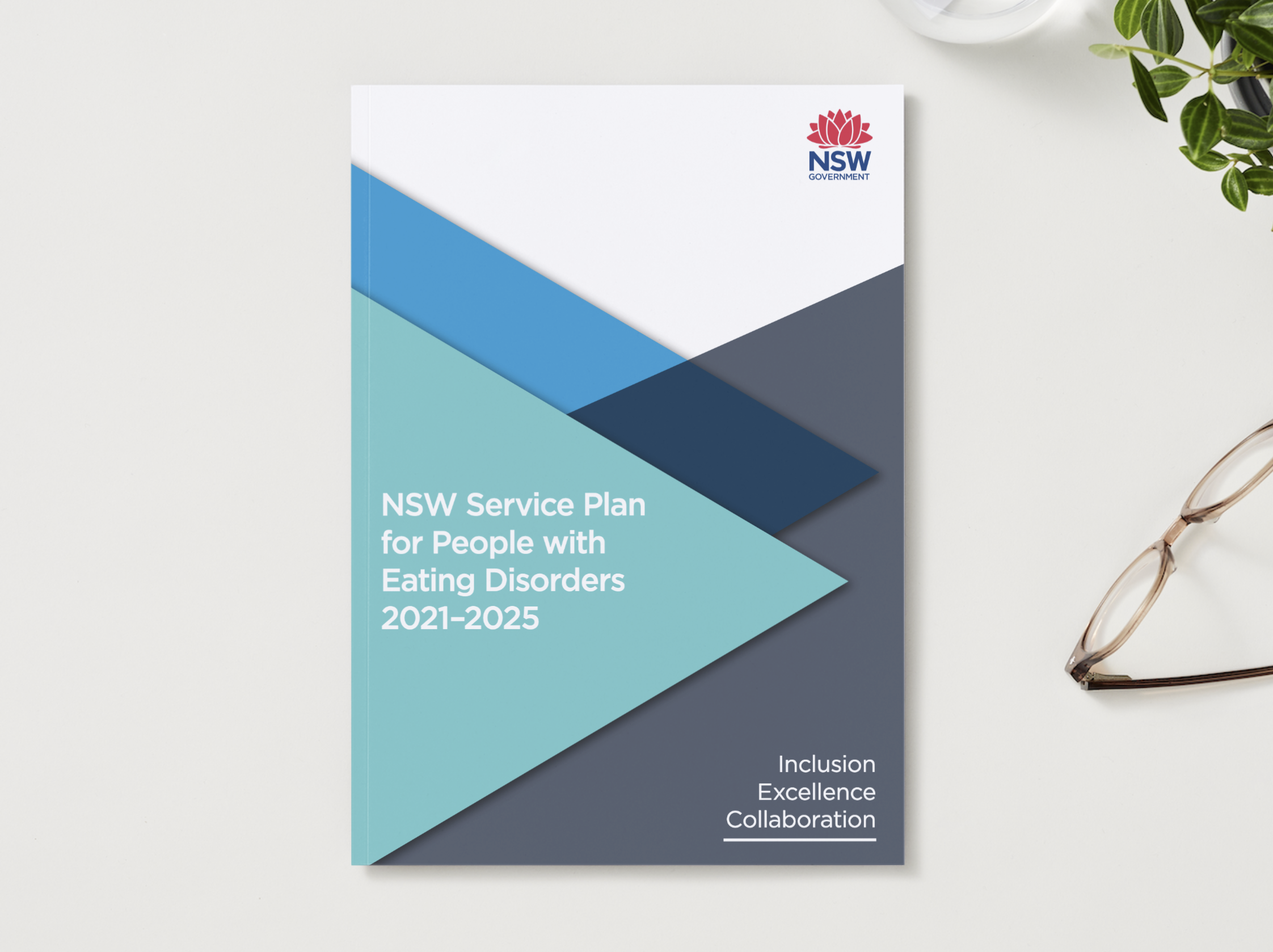
The NSW Service Plan sets out a major five‑year effort to strengthen eating‑disorder care across the health system, improving access, quality, and outcomes through better services, pathways, and workforce capability. This research evaluates how well service plan training boosts knowledge and confidence so programs can keep improving and inform government and sector-wide planning.
Aims
The NSW Service Plan aims to improve the health and wellbeing of people with or at risk of developing an eating disorder and the lives of their families, carers and communities. The Service Plan is ambitious in its intent and aims to embed eating disorders service provision as core business for Local Health Districts and Speciality Health Networks.
Background
This Service Plan, to be implemented over five years, will continue to build and progress on the foundations that were set in the initial Service Plan. It aims to improve health outcomes and access to care; to improve the quality of care and deliver efficient and effective care. The Service Plan will continue to build workforce capacity and strengthen pathways to care across the continuum of eating disorders treatment. It involves a whole of health reform, driven centrally and implemented locally, to prepare and equip the NSW Health system to identify, provide access to, and treat people with eating disorders. This Service Plan has enabled the development of new hospital and community services for eating disorders – the single largest and most ambitious eating disorder clinical redesign ever undertaken nationwide.
The Essentials: Upskilling a National Health Workforce in the Identification and Treatment of Eating Disorders
Maloney, D., Ong, S. H., Miskovic-Wheatley, J., Dann, K. M., Sidari, M., Hambleton, A., Marks, P., & Maguire, S.
The International Journal of Eating Disorders.
57(12), 2427–2437.


© 2026 InsideOut
InsideOut acknowledges the tradition of custodianship and law of the Country on which the University of Sydney and Charles Perkins Centre campus stands. We pay our respects to those who have cared and continue to care for Country. We are committed to diversifying research and eliminating inequities and discrimination in healthcare. We welcome all people regardless of age, gender, race, size, sexuality, language, socioeconomic status, location or ability.