

© 2026 InsideOut
InsideOut acknowledges the tradition of custodianship and law of the Country on which the University of Sydney and Charles Perkins Centre campus stands. We pay our respects to those who have cared and continue to care for Country. We are committed to diversifying research and eliminating inequities and discrimination in healthcare. We welcome all people regardless of age, gender, race, size, sexuality, language, socioeconomic status, location or ability.
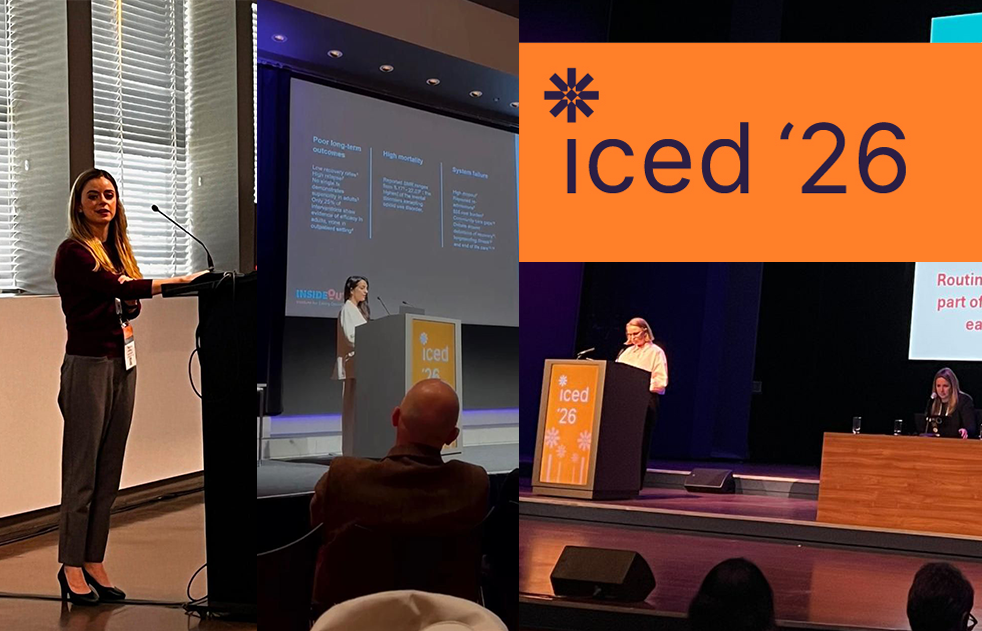
InsideOut Institute researchers were proud to be part of the global eating disorders community at the International Conference on Eating Disorders (ICED 2026), hosted by the Academy for Eating Disorders (AED) in The Hague, contributing to discussions that are shaping the future of research, treatment, and care.
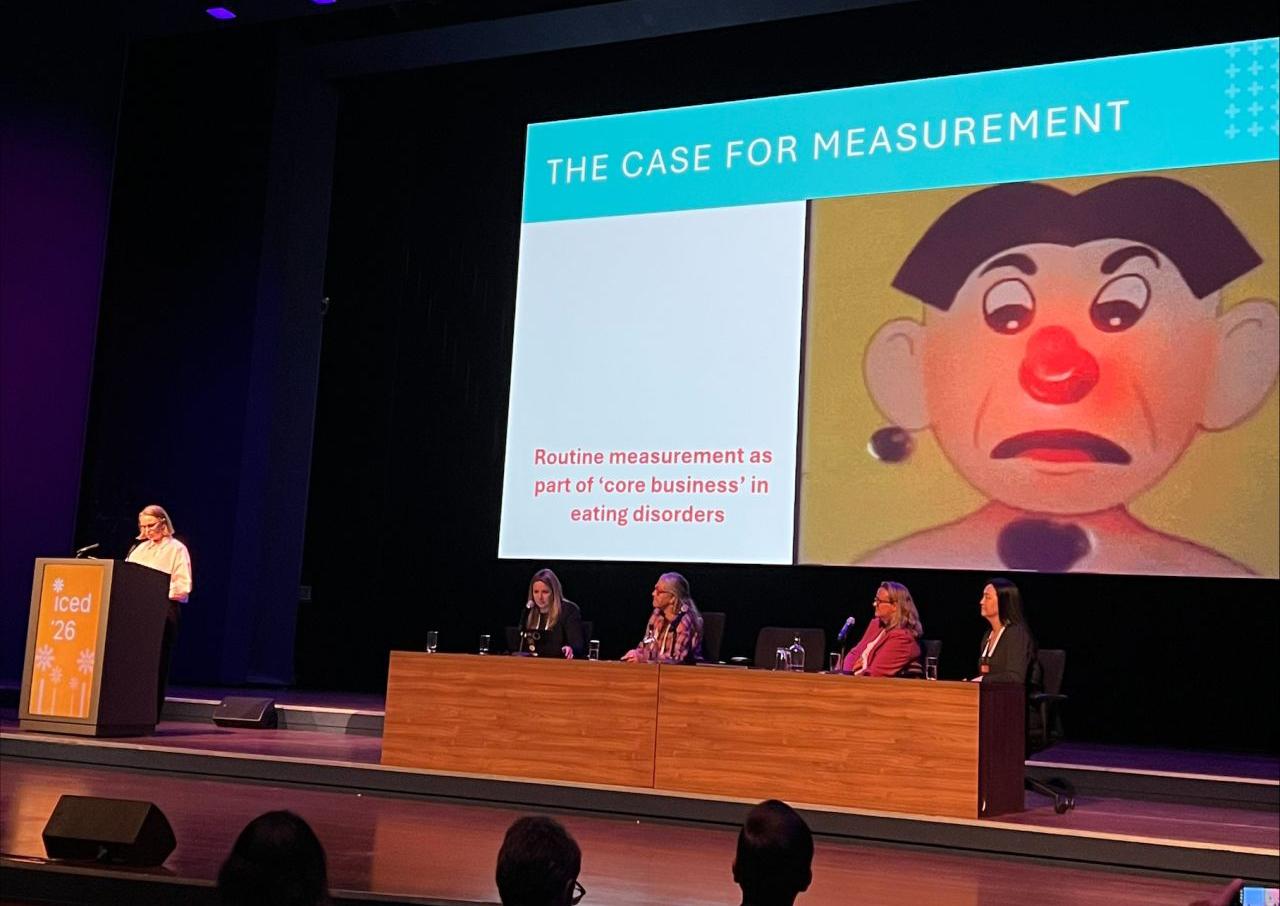
Among the conference's key sessions was a plenary address by InsideOut Director, Prof Sarah Maguire, exploring Measurement-Focused Care in Eating Disorders: Promises and Pitfalls, presenting her research and experiences with measurement-focused care and routine outcome monitoring in the field of eating disorders.
Sarah called for a paradigm shift in the way the field approaches measurement and personalised care; to move beyond relying solely on research data, embrace co-design to address narrow and outdated understandings of eating disorders, and develop measurement approaches that can support personalised care without being overly data-intensive or difficult to implement in clinical settings.
"There is a direct link between what we measure and innovation.”
— Prof Sarah Maguire
InsideOut's presence at ICED 2026 also highlighted the breadth of research being undertaken across the Institute.
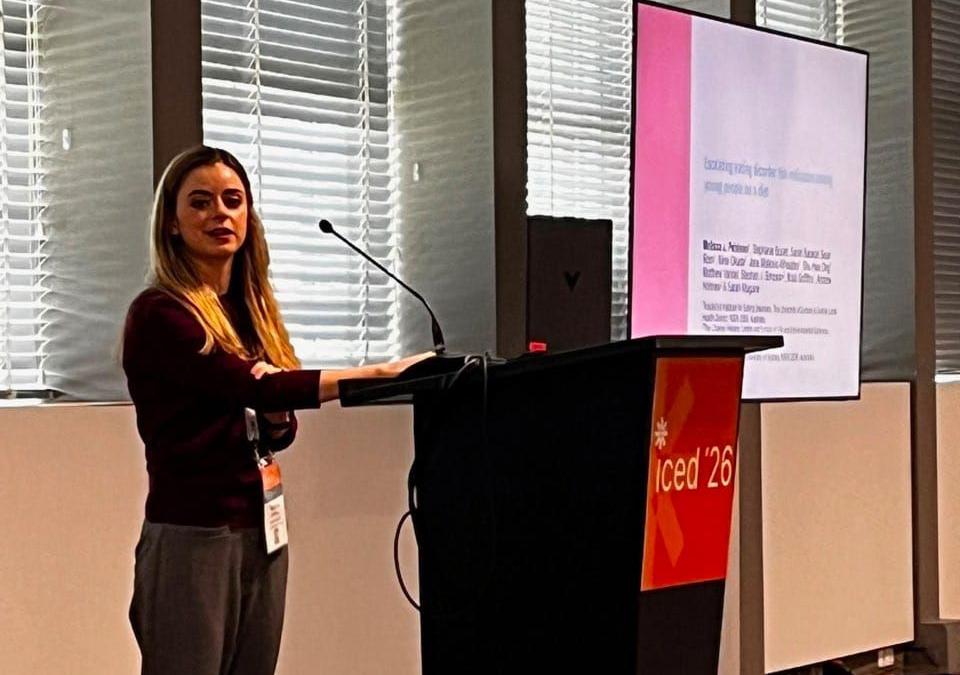
Dr Melissa Pehlivan presented findings from the MyDiet Study, with her paper, Escalating eating disorder risk indicators in young people on a diet, recognised as one of the Top 10 Abstracts at ICED 2026. The groundbreaking study contributes to a growing evidence base aimed at improving understanding and outcomes for people experiencing eating disorders; addressing a critical gap in eating disorder prevention by becoming the first longitudinal study worldwide to track young people as they begin dieting, identifying early warning signs of eating disorder development while also examining the role of the gut microbiome and genetic risk.
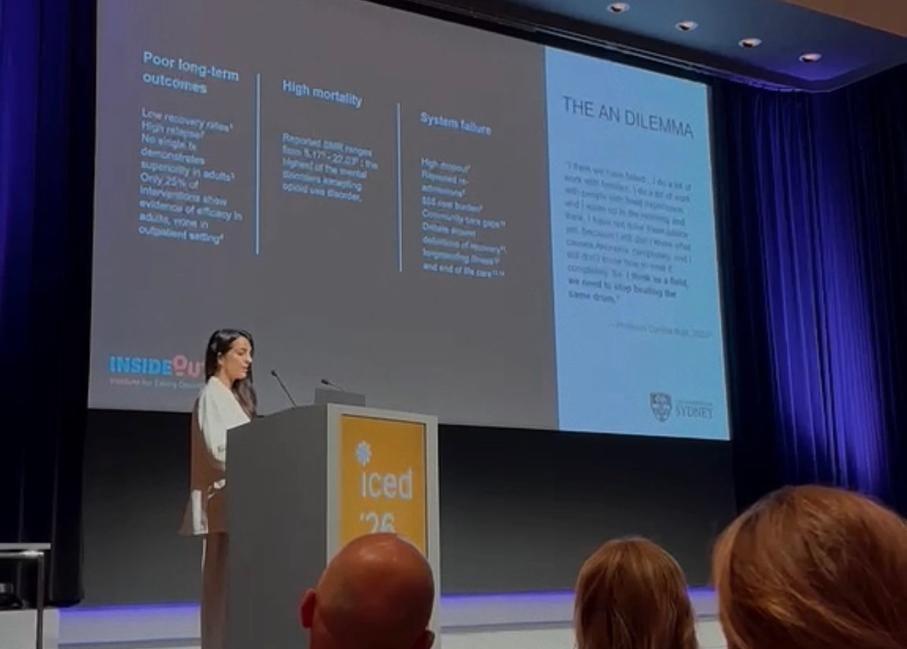
Meanwhile, Dr Emma Bryant presented her PhD research focused on reconceptualising Anorexia Nervosa, offering fresh perspectives on one of the field's most complex and enduring challenges. Her research challenges long-held assumptions that the illness is primarily driven by concerns about body weight and shape, and her findings suggest anorexia is better understood as a crisis of embodiment and selfhood, offering a new framework for understanding and treating a disorder that cannot be reduced to a drive for thinness alone.
The conference provided a valuable opportunity to connect with colleagues from across Australia and around the world, strengthening relationships and fostering new collaborations. Bringing together researchers, clinicians, advocates, and lived experience leaders, ICED continues to serve as an important platform for sharing knowledge, challenging existing thinking, and accelerating progress in eating disorder prevention, treatment, and recovery.
For the InsideOut team, ICED 2026 was both a celebration of innovative research and a reminder of the collective commitment required to improve outcomes for people living with eating disorders. Through collaboration, innovation, and evidence-based care, the global eating disorders community continues to drive meaningful change for individuals, families, and communities affected by these illnesses.